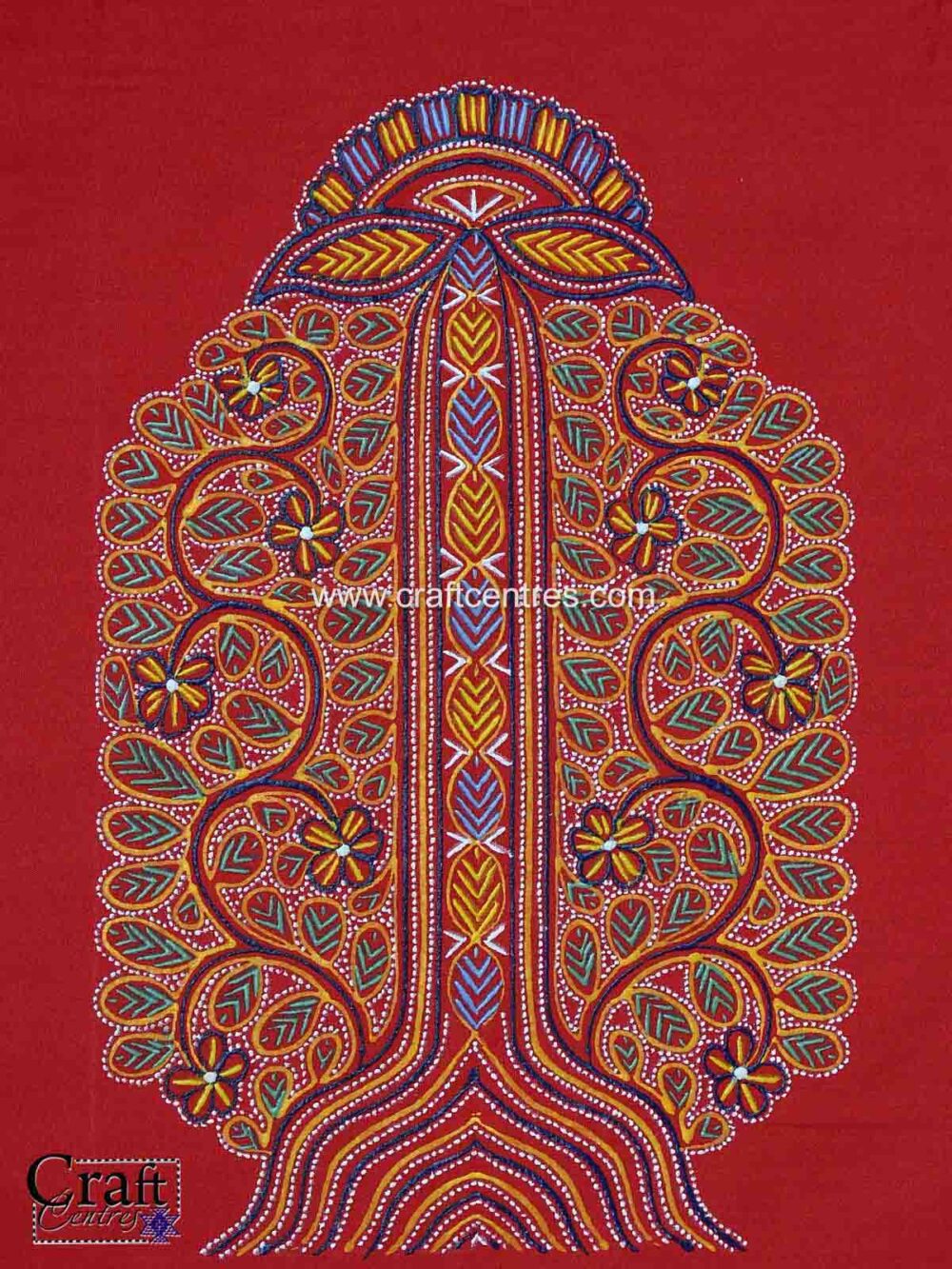
Ashish Kansara (b. 1975) is an Indian artisan celebrated for preserving Rogan painting, a rare 1,550-year-old Kutch textile art. Full name is Ashish Shantilal Kansara. Rogan painting uses a castor-oil–based paint applied freehand to cloth with a metal stylus, producing intricate “threads” of colour. Kansara has been described as a “passionate guardian and torchbearer” of this endangered craft. Born in Ahmedabad, Gujarat in 1975, he grew up in a family historically connected to Rogan art: his grandfather Jamnadas Vastaram Kansara was a skilled Rogan painter (later moving to mill work), and his father Shantilal Kansara was a rickshaw driver.
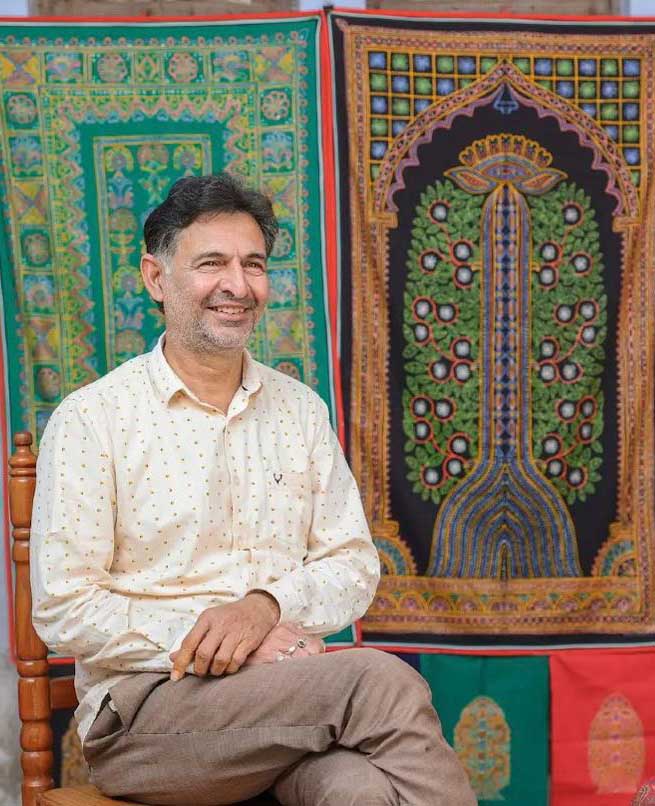
Early Life and Education | Ashish Kansara
Ashish Kansara showed an early interest in Rogan art. Around age 14 (in the early 1990s) he was introduced to Rogan painting and began learning the craft. I heard Ashish Kansara’s interview in All India Radio, about Rogan art. He completed only the 9th grade at Meghdoot Vidya Vihar (Gujarati-medium) school, and then left formal education to focus on the art. After leaving school, he trained under his grandfather Jamnadas Vastaram Kansara and local artist Ashokbhai and dedicated himself to Rogan painting.
Family and Personal Life
Kansara settled in Madhapar village near Bhuj in Kutch, Gujarat, which is now the centre of his work. He and his wife Komal Kansara (also a Rogan artist) have worked together to keep the tradition alive. They have a son, Vasudev Kansara, who is learning Rogan painting and already gaining recognition for his skill. Committing to community-building, the Kansaras have trained over 130 women in Madhapar in Rogan techniques. (This broke a long-standing tradition of secrecy around Rogan art and helped expand the craft beyond one household.)
Ashish Kansara holds the legal GI authorization (AU/35946/GI/718/1) for Kutch Rogan Craft (Tag 718)
Career and Innovations
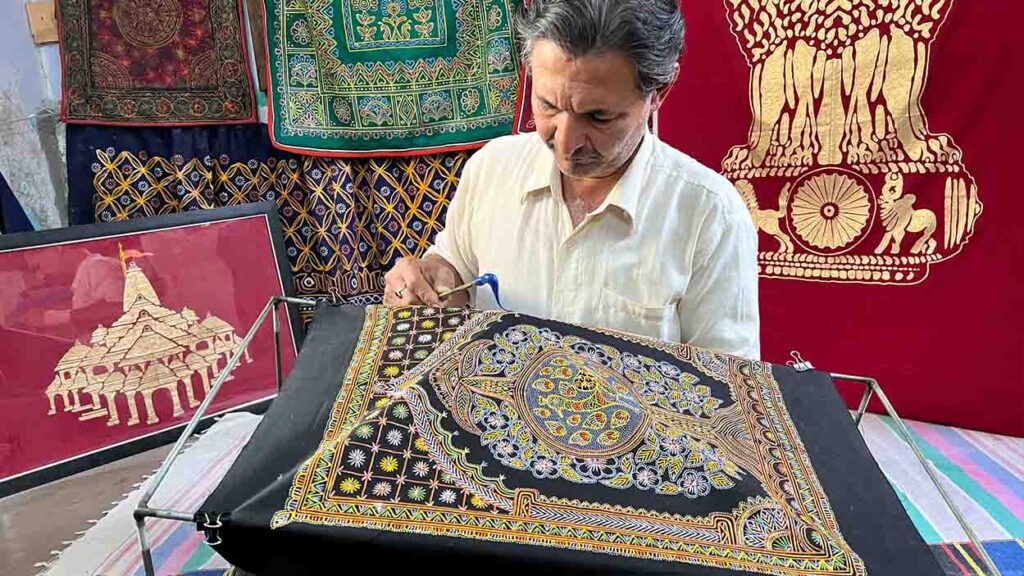
Kansara grew up mastering the traditional Rogan art techniques of his family’s community. Early in his career he produced traditional Rogan textiles, hand-painting bridal lehengas, saris and chaniya cholis for local Kutch communities (e.g. the Bharwad and Rabari) using the vibrant Rogan “threads” of castor-oil paint. However, the 2001 Bhuj earthquake and the rise of machine-printed fabrics led to a collapse in demand for hand-painted textiles. During that period he temporarily set aside Rogan art and took jobs in photography and private offices to support his family.
In 2006, Kansara revitalized Rogan art with new innovations. Recognizing that consumers wanted fresh designs, he introduced novel patterns and applied Rogan painting to new products: shawls, scarves, wall-hangings, wallets, stoles and other home décor items. Rogan art Bhujodi Saree. He also achieved a historic first by using the viscous Rogan paste to paint figurative portraits of Hindu deities (such as Krishna and Ganesha) and scenes like the Rajaraja (Ram) Darbar. These sacred images were previously thought impossible in Rogan; Kansara’s Ram Darbar painting (completed in 2023) took three months of painstaking freehand work. For example, one Gujarati news report describes how Kansara spent three months creating a Rogan portrait of Shri Ram Darbar intended for Ayodhya’s new Ram Temple.
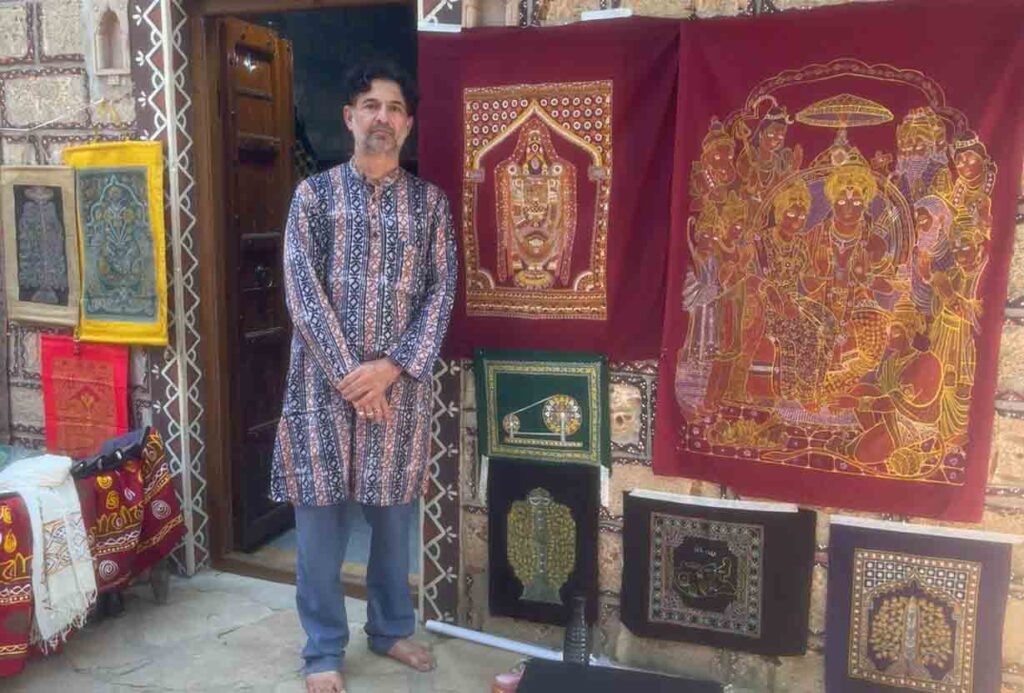
Through these innovations, Kansara has kept the craft relevant. His work now features in fashion shows and handicraft exhibitions, raising public awareness of Rogan art. He maintains an atelier in Madhapar where he both creates his own art and conducts workshops. Along with Komal, he hosts training sessions for villagers (especially women) on Rogan techniques. This teaching has helped ensure that Rogan painting is passed to a new generation, rather than dying out.
Achievements and Recognition
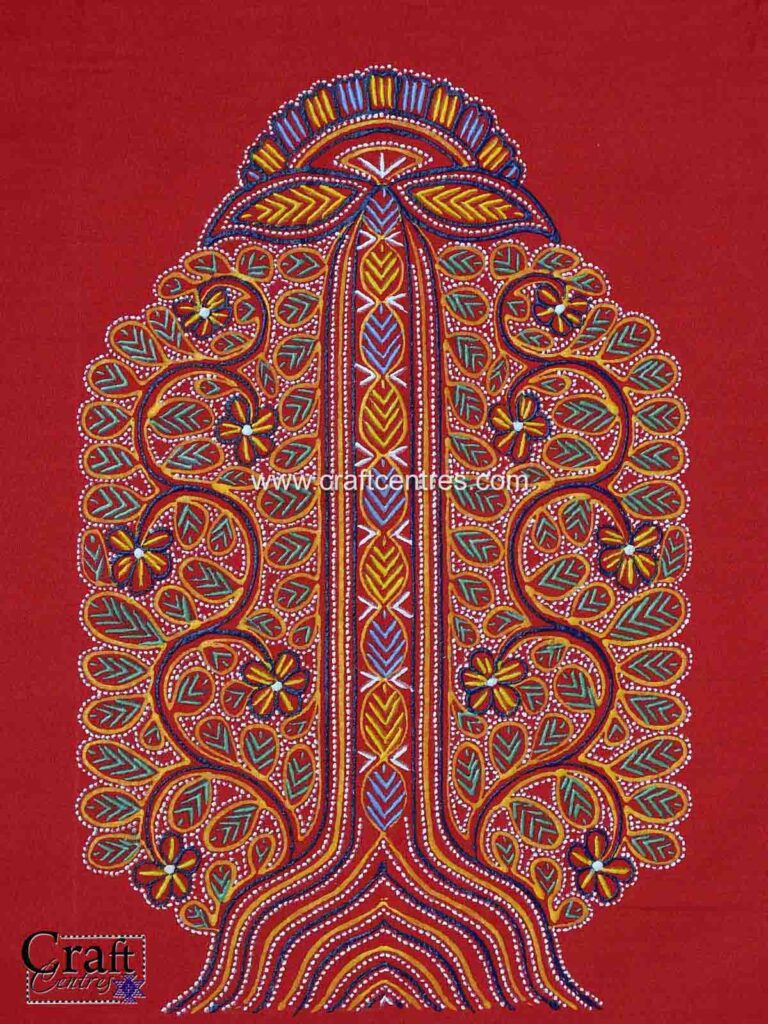
Kansara’s contributions have earned notable recognition. He is a legally recognized Authorized User of the Kutch Rogan Craft Geographical Indication (GI) tag. In other words, the Indian government has certified that Kansara’s work is authentic Kutch Rogan art. He has also received handicraft awards; for example, he was honored with the Craftcentres Winner Award and the V.C. Award for his role in preserving and innovating this tradition. (According to one source, despite his achievements the Gujarat state has not given him a formal state award, but these honors reflect his esteem in craft circles.) Kansara’s work – especially his unique deity portraits – is often cited as a cultural achievement of the region.
Publications and Media
Kansara has shared his story in various media, though he has no formal academic publications on art. He authored articles for craft blogs and has given interviews. For instance, one profile calls him a “passionate guardian” of Rogan painting, and he has recounted how an All India Radio feature first motivated him to learn Rogan art. His work has been covered by regional news outlets. In January 2024, a Gujarati newspaper featured Kansara’s Ram Darbar painting and noted that it was destined for the Ayodhya temple. News18 Gujarati and other channels have reported on the Gor Mahar community of artisans, including Kansara’s Madhapar workshop. (He has also gained attention on social media and in handicraft newsletter, though most published references are news and blog features also scholarly journals.)
Recent News and Appearances
In recent years Kansara has continued to garner attention. As noted, his Rajaraja (Ram) Darbar Rogan painting was widely reported in 2024. That work – a Rogan portrait of Lord Rama’s court – is on display (at Surat Airport, en route to Ayodhya) and represents one of the most elaborate pieces he has produced. Kansara has also participated in cultural events; for example, his creations are included in exhibitions of Kutch crafts and in government-supported handicraft fairs. In late 2025 he was featured in an interview on ANI News, highlighting his life’s work (social media posts confirm the broadcast). Throughout, Kansara remains active in his Madhapar studio, accepting commissions (from local and international buyers) and teaching workshops.
Notable Achievements: Beyond the GI recognition, Kansara’s awards include craft-industry honors (Craftcentres Winner, V.C. Award). His innovations – particularly painting portraits of deities in Rogan art – are often cited as milestones. He has preserved all three historical branches of Rogan technique (freehand, mold-printing “chhap”, and mica-embellished “varnika” styles), making him unique in the world of Rogan art.
Legacy: Through persistence and innovation, Ashish Shantilal Kansara has kept alive a centuries-old heritage. As one article notes, “through the tireless efforts of Ashish Kansara and his family, this living legacy continues to enchant and inspire”. By training others and continually evolving the craft, he ensures that Rogan painting – once on the brink of extinction – will survive in the 21st century and beyond.