The Kansara community is a living repository of artisanal skills that bind craft, ritual, and everyday life. Traditionally metalworkers by vocation, Kansara’s produce functional and ceremonial objects in brass/bronze (kansa), fashion fine silver and gold jewellery, and—less widely known—have contributed to the living tradition of Rogan painting in parts of Kachchh. Their work speaks to craft economies that predate industrial manufacturing and to cultural practices that remain embedded in regional identity.
Origins and social role
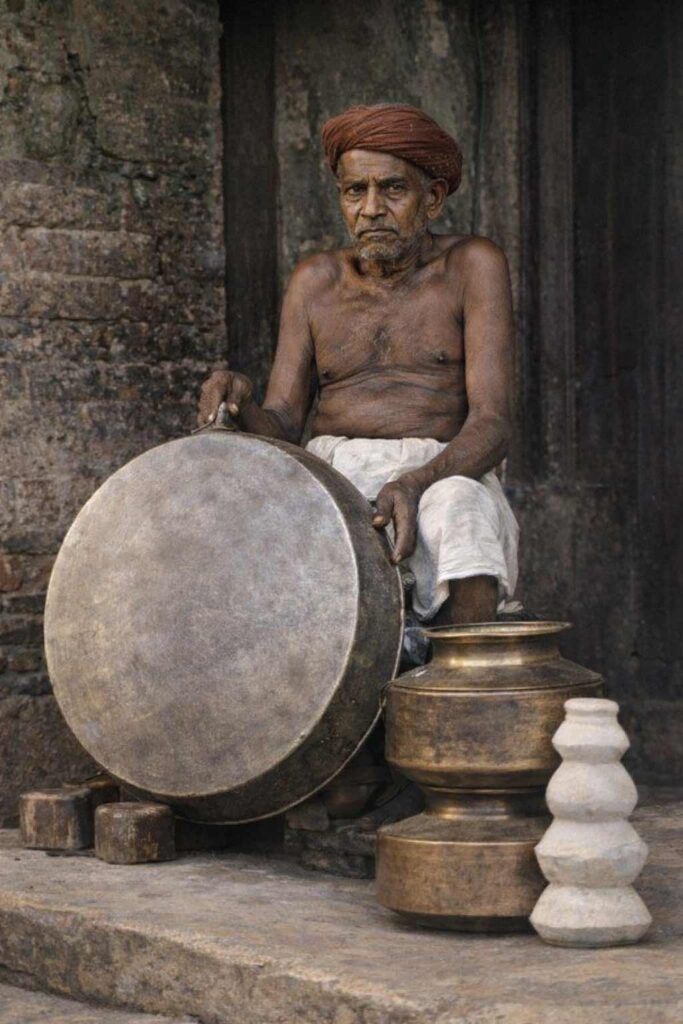
Kansara is an occupational community whose expertise centres on metals—shaping utensils, ceremonial vessels, and decorative items that are integral to domestic, religious, and civic life. Their products are present in households, temples, weddings, and festivals. This steady demand historically provided Kansara families with stable livelihoods and gave the community a respected technical role: they were not only makers but custodians of metallurgical knowledge, alloy formulas, and finishing techniques passed down through generations.
Three core crafts
- Kansa (bronze/bronze-alloy) work
Kansa refers to a brass/bronze alloy traditionally used for utensils, lamps, and ritual objects. Kansara artisans cast, hammer, file, and finish these items to tight tolerances—producing durable goods that age gracefully. The craft requires practical metallurgy (alloy composition, melting and pouring), mold-making skills, and a fine eye for surface finishing. Many kansa pieces are functional but designed with motifs and forms that reflect regional aesthetics. - Silver and gold jewellery making
Within the community some families specialize in precious metalwork—designing and fabricating necklaces, bangles, earrings, and ceremonial ornaments. This work often combines hand-forging, granulation, stone-setting, and traditional motifs. Jewelers typically serve local markets and bridal/caste-based demand, and their work preserves stylistic languages (filigree patterns, symbolic forms) that link communities across generations. - Rogan painting (regional linkage)
Though better known as a textile art from Madhapar, Kachchh, Rogan painting has connections with Kansara families in areas where multiple craft practices coexist. Rogan is a slow, oil-based painting technique using castor oil and natural pigments applied with a stick or small iron rod to create raised, highly detailed motifs on fabric. Local practitioners—such as master artists who keep the technique alive in small workshops—often share techniques and markets with other artisanal communities, including Kansaras. The cross-pollination of craft skills and markets helps sustain small-scale studios and cooperative efforts.
Technique and material knowledge
Kansara craft is technical: heat control for melting alloys, preparation and maintenance of molds, toolmaking, polishing and patination, and—in jewellery work—precision in joining and stone setting. Rogan painting, where present, depends on mixing castor-oil-based pigments to a specific viscosity and applying them in continuous lines using a short iron or wooden rod; the process is physically demanding and requires exceptional hand control. These material knowledges are embodied skills—learned through apprenticeship and practice rather than written manuals.
Contemporary challenges
- Market pressure: mass-produced alternatives undercut prices and reduce demand for handmade metal goods.
- Young people’s aspirations: migration to urban jobs and declining interest in time-intensive apprenticeships reduce transmission of skills.
- Recognition and support: crafts that are locally vital often lack access to consistent marketing channels, quality certification, and design collaborations that open higher-margin markets.
- Material costs and supply chains: rising prices for metal and precious stones squeeze small workshops’ margins.
- Documentation: many process details and oral histories remain undocumented, putting tacit knowledge at risk.
Preservation and revival strategies
- Design partnerships: collaborations with contemporary designers can refresh product lines for urban and export markets while respecting traditional methods.
- Skill documentation: video tutorials, process manuals, and audio histories capture techniques and context for training and scholarship.
- Fair-trade and direct-market channels: cooperatives, e-commerce platforms, and craft trails (workshop visits, demonstrations) help artisans capture larger shares of retail value.
- Apprenticeship incentives: stipends or micro-grants for apprentices can make learning the craft economically viable.
- Local branding: place-based labels that highlight provenance—e.g., “Kansa” or “Handmade Rogan by local masters”—build consumer trust and premium pricing.
How individuals and institutions can help
- Buy responsibly: purchase directly from workshops, cooperatives, or verified sellers to ensure value returns to artisans.
- Commission and collaborate: short-term commissions and design residencies give artisans exposure to new form languages and markets.
- Fund training and documentation: support programs that pay master artisans to train apprentices and record craft processes.
- Promote craft tourism: curated visits and demonstrations provide income and create ambassadors for the craft.
- Advocate for policy support: encourage local and national programs to support raw material subsidies, stall spaces, and craft education.
Conclusion
The Kansara community’s combination of metallurgical skill, jewellery craftsmanship, and regional artistic connections (including Rogan painting) makes them a cultural and economic asset. Safeguarding their future requires market access, respectful design innovation, skills documentation, and policies that acknowledge the true cost of handcraft. When supported thoughtfully, Kansara artisans can sustain their traditions while adapting to the demands of contemporary markets—keeping craft knowledge alive for future generations.